
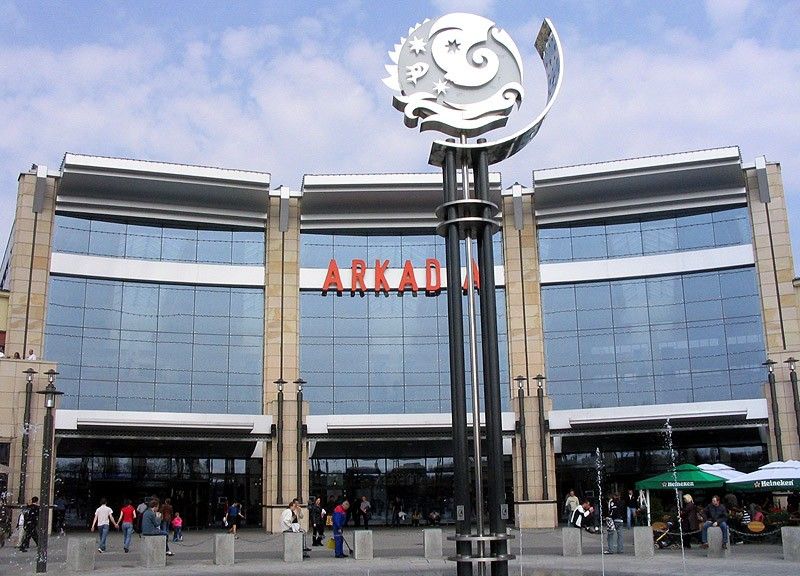
Arkadia Shopping in Warsaw – It was the first project I worked on. Shortly after graduating from University in 2003, I joined the project team. At that time, the proposed project was the largest shopping center built in Central Europe. Two years later, it lost the title to another shopping center in Moscow, and later it was no longer the largest in Poland after Manufaktura in Lodz was completed. It doesn’t change my conviction that it was a significant challenge (because it was the very first) in my professional life. The Center was completed in autumn 2004, and I joined the design team in October 2003 (just after finishing my civil engineering studies).
The center, built for 270 million euros, covers almost 287,000 square meters across five floors (including two basement floors designed for car parking). The Gross Leasable Area (GLA) of Arkadia Shopping Center is almost 103,000 square meters. This number includes 230 commercial premises: 180 shops, 20 service units, and 30 restaurants and cafes. Each floor has a characteristic leading Arcadia profile:
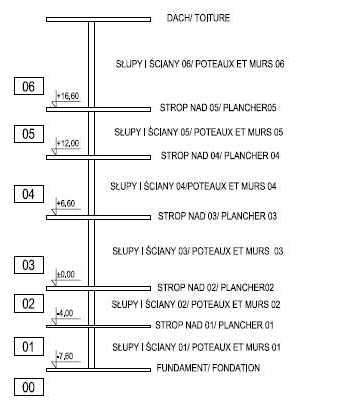
- Level -2 and -1: In total 4000 car parking spaces on two underground levels.
- Level 0: Primarily for everyday shopping; here you can find a hypermarket, a sports shop, DIY, home decorating, as well as small electrical appliances, multimedia, and furniture. Also on the ground floor are five restaurants with a separate entrance at the front of the building; each has a garden and is available regardless of the center’s opening hours.
- Level 1: Fashion and extras. Here you will find mostly clothing stores, which make up World of Fashion. A specific feature of Arcada is that the entire first floor is dedicated to fashion shops. A wide selection of shops offers consumers a broad range for youth and families, as well as selected top brands. At the same level, there is also a food court, a medical clinic, ENEL-MED, and a fitness club, Holmes Place.
- Level 2: It is fun – Multiplex Cinema City with 15 screens.

The whole city is divided into four shopping malls by the quadrangle plan. They were given names after their style and are called Wisła (Vistula), Kopernik (Copernicus), Pan Twardowski (Mr Twardowski – mythological traveler to the Moon), and Canaletto.
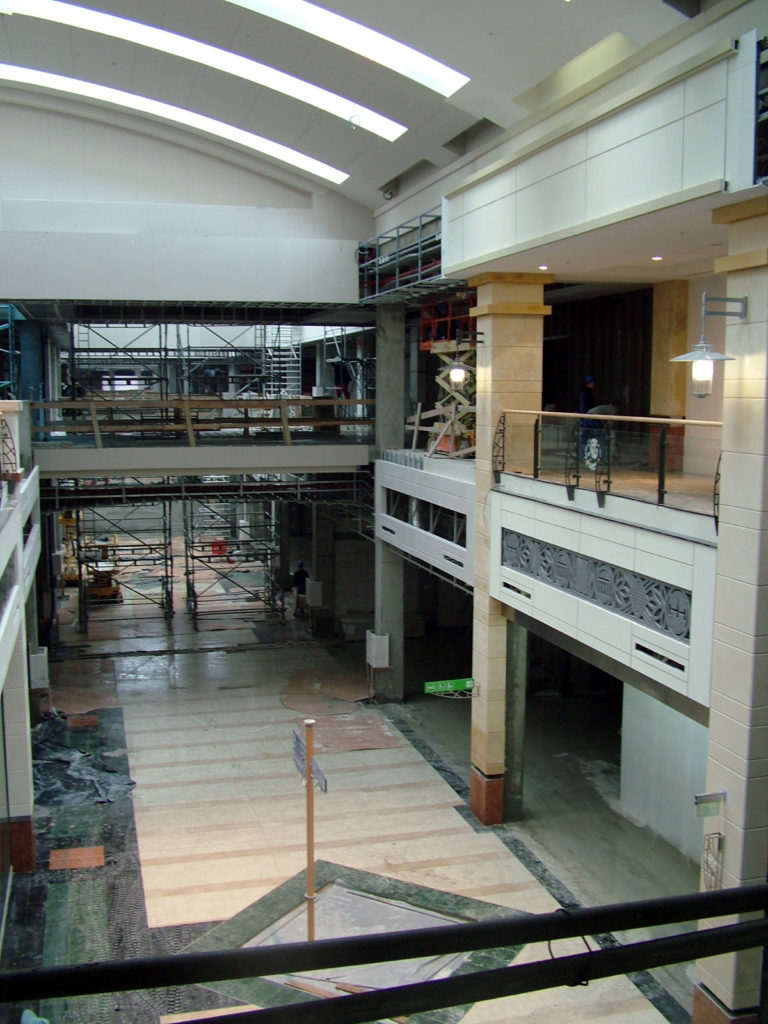
Each mall has its own character, different architecture, and symbolism. For example, the Vistula Mall’s architecture is closely tied to views of the Vistula River. In the middle of the mall, the blue ribbon writhing symbolizes the river. In turn, the roof was cut out to create a huge wavy window.
The passage of Copernicus’s decoration refers to astronomy and mathematics. The passage of Mr Twardowski reflects the creators’ intention to draw customers into a world of fairy tales. The Canaletto passage refers to the climate of the urban design shopping street. Notably, every lessee had to adapt their shopfront design to the passage’s main project. The architects of the center watched it.
Outside the square with a fountain mirrors the internal Theatrum. High on the two gallery floors, the space hosts future exhibitions and performances. Before entering the center, a substitute for the park was designed. Its focal point is a fountain. It can operate in three modes: normal, musical – when water gushes to the music, and special. In the latter, the water gushes at a frequency depending on which tile surrounding the fountain is just stepped on.
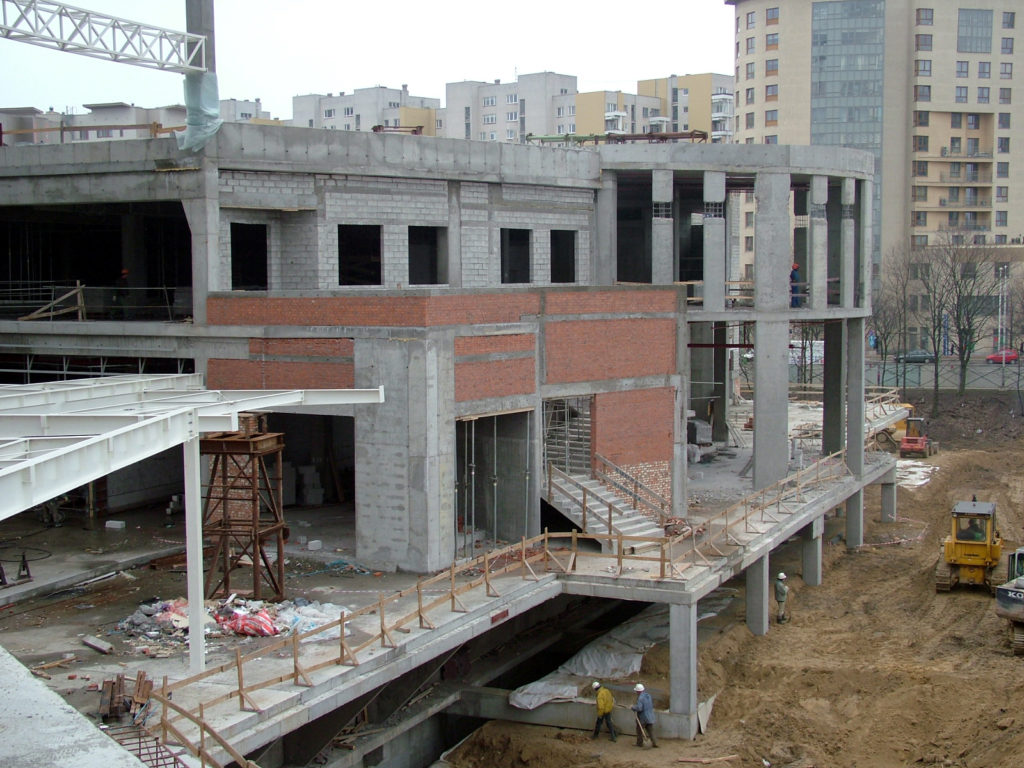
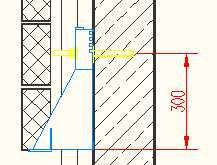
The last picture shows Arkadia, which I will never forget – long before, it was clad in an elegant red block of concrete hung on consoles, as seen in the drawing below.
 |  |